Guest Post

HAVE A BOOK TO PROMOTE? Lyrical Pens welcomes guest posts. Answer a questionnaire or create your own post. FYI, up front: This site is a definite PG-13. For details, contact cjpetterson@gmail.com cj
Showing posts with label #contronyms. Show all posts

Sunday, January 7, 2024

Welcome back to Lyrical Pens in 2024

cj Sez: I hope your December holiday celebrations were wonderful, and you made many lovely memories. Now, as Draft2Digital told me in a recent email: “It’s time to soar in 2024!”


  I want to continue my last contronym post with just a few more examples from the article “40 Words and Phrases That Are Their Own Opposites” by Judith Herman. 

14. Clip  Clip can mean “to bind together” or “to separate.” You clip sheets of paper to together or separate part of a page by clipping something out. Clip is a pair of homographs, words with different origins spelled the same. Old English clyppan, which means “to clasp with the arms, embrace, hug,” led to our current meaning, “to hold together with a clasp.” The other clip, “to cut or snip (a part) away,” is from Old Norse klippa, which may come from the sound of a shears.

15. Continue usually means “to persist in doing something,” but as a legal term it means “to stop a proceeding temporarily.”

16. Fight with can be interpreted three ways. “He fought with his mother-in-law” could mean “They argued,” “They served together in the war,” or “He used the old battle-ax as a weapon.” (Thanks to linguistics professor Robert Hertz for this idea.)

17. Flog, meaning “to punish by caning or whipping,” showed up in school slang of the 17th century, but now it can have the contrary meaning, “to promote persistently,” as in “flogging a new book.” Perhaps that meaning arose from the sense “to urge (a horse, etc.) forward by whipping,” which grew out of the earliest meaning.

18. Go means “to proceed,” but also “give out or fail,” i.e., “This car could really go until it started to go.”

19. Hold up can mean “to support” or “to hinder”: “What a friend! When I’m struggling to get on my feet, he’s always there to hold me up.”

20. Out can mean “visible” or “invisible.” For example, “It’s a good thing the full moon was out when the lights went out.”

21. Out Of  Out of means “outside” or “inside”: “I hardly get out of the house because I work out of my home.”

22. Toss Out   Toss out could be either “to suggest” or “to discard”: “I decided to toss out the idea.”

23. Peer   Peer is a person of equal status (as in a jury of one’s peers), but some peers are more equal than others, like the members of the peerage, the British or Irish nobility.

24. Original  According to Dictionary.com, original can mean either “belonging to the beginning of something” or “new, fresh, inventive.” 

That’s it for this thread on Lyrical Pens. To read the rest of the article, click on this link and enjoy: https://www.mentalfloss.com/article/57032/25-words-are-their-own-opposites

§§

  For writers and readers: The link below is to a recent article on Jane Friedman’s blog directed to writers, but I think there are some clues in there that would serve any parent of a teen well: https://janefriedman.com/4-things-every-ya-writer-should-know-about-teens/

§§

  Okay, that’s the post for today. You-all guys keep on keeping on, and I’ll try to do the same. Raising prayers for a happy and safe you and yours.

cj

Now some words from my sponsors: 
Available! Two Mobile Writers Guild anthologies with a variety of wonderful short stories and poems to celebrate upcoming special days. (P.S The city of Mobile, Al, has already started Mardi Gras celebrations.)

 
  My novels, THE DAWGSTAR and DEATH ON THE YAMPA are fast-paced, thriller/suspense stories with sassy banter and a smidgen of romance. The books are available on Amazon or through your favorite eTailer and bookstore. Got a library card? You can read the ebooks free from Hoopla.

  The Haunted Book Shop has a few signed copies of my paperback books in stock. TO ORDER, contact: https://www.thehauntedbookshopmobile.com/contact-us  If the shop happens to be sold out, shoot me an email. I have a small stash (with a discounted price plus shipping).

➜ Follow me on . . .  
➜ Amazon:    Amazon Central Author Page
➜ Goodreads: https://bit.ly/3fcN3h6


Sunday, December 10, 2023

Do you know what a contronym is? (Part 1 of 3)

cj Sez: Here’s a fascinating article on contronyms, explaining word usages by Judith Herman. Did I ever mention that English is hard? The article started out as 25 words and in January 2023 became: “40 Words and Phrases That Are Their Own Opposites.” The article is a bit too long for a single Lyrical Pens post, so today’s post will include thirteen of the words. Watch for the rest of the words in January 2024. Can you believe that? 2024!  

  Stumble into the looking-glass world of contronyms — Judith Herman 

  Here’s an ambiguous sentence for you: “Because of the agency’s oversight, the corporation’s behavior was sanctioned.” Does that mean, “Because the agency oversaw the company’s behavior, they imposed a penalty for some transgression,” or does it mean, “Because the agency was inattentive, they overlooked the misbehavior and gave it their approval by default”? We’ve stumbled into the looking-glass world of contronyms—words that are their own antonyms. 

  The contronym (also spelled “contranym”) goes by many names, including auto-antonym, antagonym, enantiodrome, self-antonym, antilogy, and Janus word (from the Roman god of beginnings and endings, often depicted with two faces looking in opposite directions). 

Here are a few of them.

1. Sanction—which came to English via French, from Latin sanctio(n-) and sancire, “to ratify,”—can mean “give official permission or approval for (an action)” or conversely, “impose a penalty on.”

2. Oversight is the noun form of two verbs with contrary meanings: “oversee” and “overlook.” Oversee, from Old English ofersēon (“look at from above”) means “supervise” (medieval Latin for the same thing: super-, “over” plus videre, “to see”). Overlook usually means the opposite: “to fail to see or observe; to pass over without noticing; to disregard, ignore,” according to the Oxford English Dictionary.

3. Left can mean either remaining or departed. If the gentlemen have withdrawn to the drawing room for after-dinner cigars, who’s left? (The gentlemen have left and the ladies are left.)

4. Dust, along with the next two words, is a noun turned into a verb meaning either to add or to remove the thing in question. Only the context will tell you which it is. When you dust are you applying dust or removing it? It depends whether you’re dusting the crops or the furniture.

5. Seed can also go either way. If you seed the lawn you add seeds, but if you seed a tomato you remove them.

6. Stone is another verb to use with caution. You can stone some peaches, but please don’t stone your neighbor (even if he says he likes to get stoned).

7. Trim as a verb predates the noun, but it can also mean either adding or taking away. Arising from an Old English word meaning “to make firm or strong; to settle, arrange,” according to the OED, trim came to mean “to prepare, make ready.” Depending on whom or what was being readied, it could mean either of two contradictory things: “to decorate [something] with ribbons, laces, or the like ... to give it a finished appearance” or “to cut off the [outgrowths] or irregularities of.” And the context doesn’t always make it clear. If you’re trimming the tree are you using tinsel or a chain saw?

8. Cleave can be cleaved into two homographs, words with different origins that end up spelled the same. Cleave, meaning “to cling to or adhere,” comes from an Old English word that took the forms cleofian, clifian, or clīfan. Cleave, with the contrary meaning “to split or sever (something)”—as you might do with a cleaver—comes from a different Old English word, clēofan. The past participle has taken various forms: cloven, which survives in the phrase “cloven hoof,” “cleft,” as in a “cleft palate” or “cleaved.”

9. Fast can mean “moving rapidly,” as in running fast, or “fixed, unmoving,” as in holding fast. If colors are fast they will not run. The meaning “firm, steadfast” came first; the adverb took on the sense “strongly, vigorously,” which evolved into “quickly,” a meaning that spread to the adjective.

10. Off means “deactivated,” as in to turn off, but also “activated,” as in the alarm went off.

11. Weather can mean “to withstand or come safely through” (as in the company weathered the recession) or it can mean “to be worn away” (the rock was weathered).

12. You'd screen a movie on this screen. Screen can mean “to show” (a movie) or “to hide” (an unsightly view).

13. Help means “assist,” unless you can’t help doing something, when it means “prevent. 

§§

   Google search info: The first night of Hanukkah 2023 started at nightfall on Thursday, Dec. 7, 2023, and the first candle is lit. The final candles are lit on Thursday evening, Dec. 14, and the holiday concludes the following day, Dec. 15.
 
§§

  Okay, that’s it for today. You-all guys keep on keeping on, and I’ll try to do the same. Raising prayers for a happy and safe you and yours.

cj


 Here are two anthologies to put on your shopping list:

  Written under my maiden name of Marilyn Olsein, my short story is titled “Dancing with Daddy,” and relates how, after a major upheaval in our lives, six-year-old me reconnected with the Swedish father I could no longer understand.  The anthology is free on Kindle.
Buy Now   


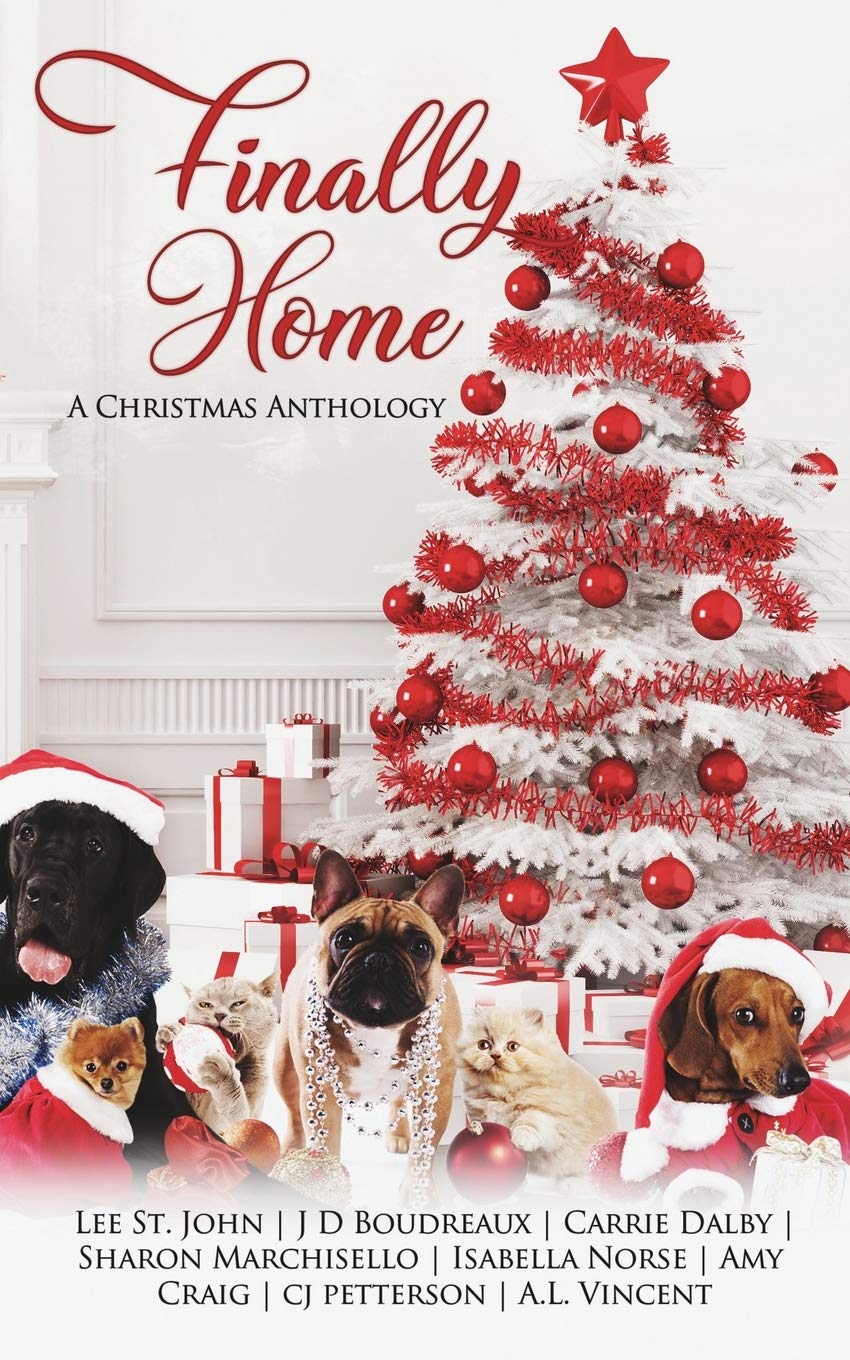
FINALLY HOME brings you eight Christmas stories all about our four-legged friends and the special people who rescue them. From funny, to sad, to romantic, there’s something here to tug at everyone’s heart strings. My short story, Puppy Love, is included.


  Price Increase Alert: My novels, THE DAWGSTAR and DEATH ON THE YAMPA will be going up in price on Jan 1, 2024. Right now, they are priced at only $2.99.
 
  The novels are fast-paced, thriller/suspense stories with sassy banter and a smidgen of romance. The books are available on Amazon or through your favorite eTailer and bookstore. Got a library card? You can read the ebooks free from Hoopla.

  Little note: Angela Trigg, the RITA Award-winning author and owner of The Haunted Book Shop has a few signed copies of my paperback books in stock. TO ORDER, contact: https://www.thehauntedbookshopmobile.com/contact-us 

➜ Follow me on . . .  
➜ Amazon:    Amazon Central Author Page
➜ Goodreads: https://bit.ly/3fcN3h6